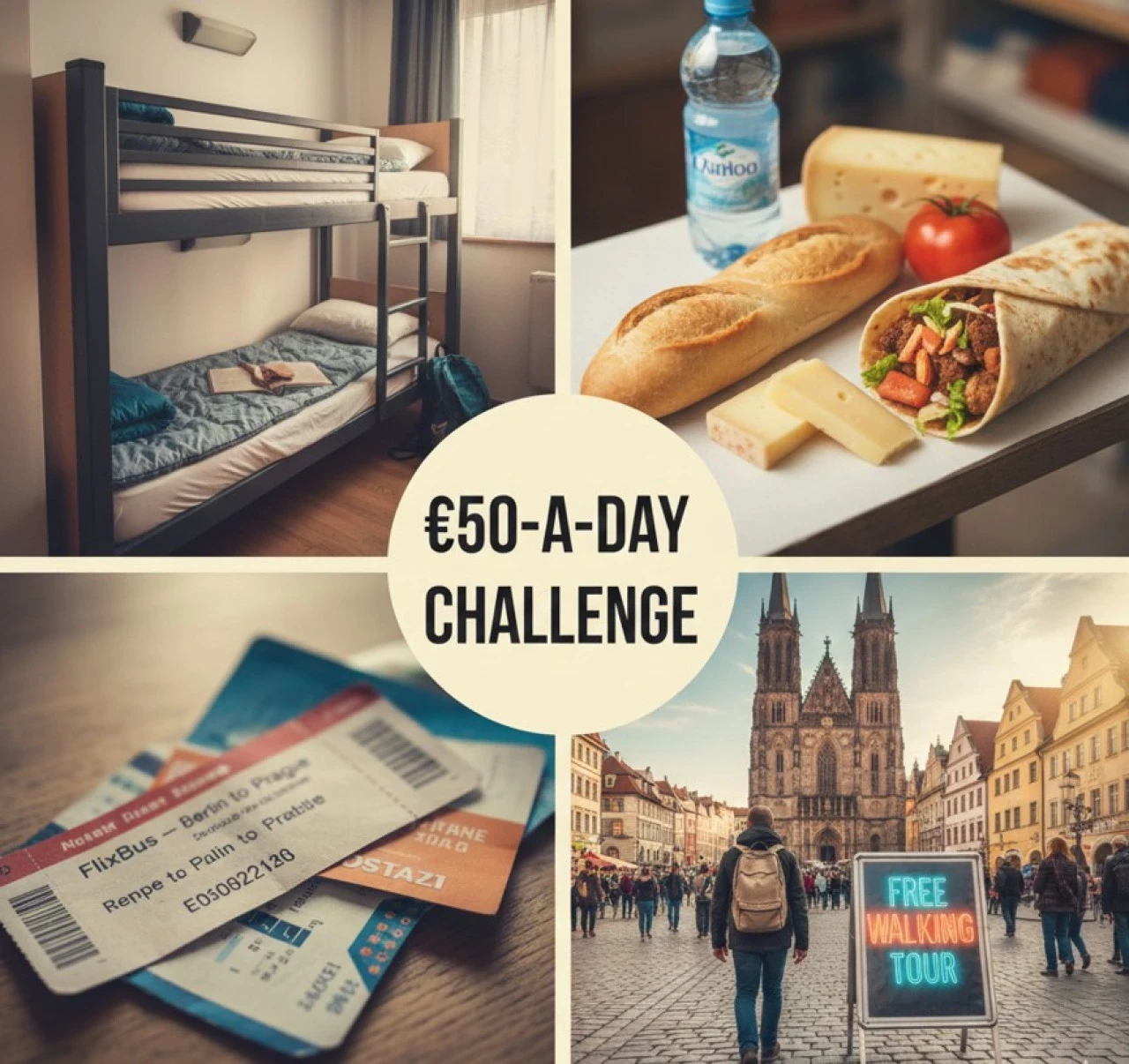
Europe—the dream destination for history buffs, foodies, and adventure seekers—often comes with a nightmare price tag. Flights are only the start; daily costs for food, transport, and accommodation can quickly deplete your savings. But what if you could experience the best of Paris, Rome, or Berlin while adhering to a strict budget of just **€50 per day**? This challenge is not only achievable but transforms your trip into a rewarding game of smart resource management. Here is your definitive guide to backpacking Europe without breaking the bank.
Mastering the Budget: The €50 Daily Breakdown
Success on a tight budget requires ruthless prioritization. The €50 must cover essentials: accommodation, local transport, food, and activities. Here’s a rough allocation model:
- Accommodation: €15 - €25
- Food & Drink: €15 - €20
- Local Transport & Contingency: €5 - €10
To keep the balance, you must commit to free or very low-cost activities and avoid buying souvenirs or unnecessary items.
Accommodation Hacks: Sleeping for Less
Accommodation will be your biggest daily battle. To stay within the €15–€25 limit, you need to look beyond traditional hotels.
Hostels: Your Budget Backbone
Hostels are the undisputed champions of budget travel. Target large, multi-bed dorms (10–16 beds), which are significantly cheaper than smaller ones. Use price comparison sites like Hostelworld or Booking.com, but be flexible with location. Staying slightly outside the central tourist zones—where you can still access public transit—can save you €5–€10 per night.
Embrace Alternative Stays
For zero-cost nights, explore options like **Couchsurfing** (staying on a local's couch for free) or **House Sitting** (looking after a property while the owners are away). While these require more planning, they offer deep cultural immersion and essential budgetary breathing room. Similarly, consider campsites outside major cities during summer months for cheaper rates than inner-city hostels.
Navigating Europe: Cheap Transport Solutions
Inter-city travel is where most budgets crumble. Avoid last-minute rail tickets or full-fare flights. Strategic planning is crucial.
The Budget Airline vs. Train Pass Debate
For long distances (e.g., London to Rome), budget airlines (like Ryanair, Wizz Air, EasyJet) are usually cheapest, but only if booked months in advance and if you travel strictly with a small personal bag to avoid checked baggage fees.
For shorter, regional hops (e.g., Berlin to Prague), trains can be competitive, especially with **discounted passes** or **early-bird tickets**. Always check the prices of long-distance budget buses (e.g., FlixBus, Eurolines). They are slow, but often the most cost-effective option for mid-range travel.
Local Transit Wisdom
In major cities, buy **multi-day passes** (24h/48h/72h tickets) for subways and buses, as single rides quickly add up. Better yet, embrace the **walk**. Walking is free, excellent exercise, and the best way to stumble upon hidden local gems that buses simply miss.
Eating Well on a Dime: Food Budget Hacks
Allocating only €15–€20 per day for food means prioritizing cooking and street food over sit-down restaurants.
The Grocery Store is Your Restaurant
The cardinal rule of budget travel is to cook as much as possible. Choose hostels with communal kitchens. Breakfasts should consist of cheap staples like oatmeal, yogurt, or bread. Lunches are simple sandwiches or salads prepared the night before. Dinner is a communal hostel meal (if available) or a pasta/rice dish made with ingredients bought from local supermarkets (Lidl, Aldi, or large local chains).
Street Food and Lunch Specials
Save your money for cheap, authentic street food (e.g., falafel in Paris, pizza al taglio in Rome, currywurst in Berlin). Look for "Menu del Día" (Lunch Menu) specials in Spain or similar fixed-price lunch deals common across Central and Southern Europe. These often provide a full, filling meal for under €12.
Free Activities: Experiencing Culture without the Cost
Many of Europe's greatest cultural treasures cost nothing to enjoy. Maximize free activities to keep your budget intact.
Museums and Galleries
Research cities for **free museum days**. Many major museums (like the Louvre or the British Museum) offer free entry on the first Sunday of the month, specific evenings, or for visitors under 26. Always check the official website.
Parks, History, and Views
Spend your time in public spaces: wandering historical neighborhoods, relaxing in sprawling parks (like Hyde Park in London or Tiergarten in Berlin), and hiking to viewpoints for stunning city panoramas. Look for **free walking tours** (often tip-based, so factor in a small tip of €5–€10). Visiting cathedrals and large public squares (Piazza Navona, Place de la Concorde) is often free and provides rich historical insight.
Final Thoughts on the €50 Challenge
Succeeding with the €50-a-day challenge requires discipline, flexibility, and a willingness to trade convenience for cash savings. You won't be eating gourmet meals or staying in private rooms, but you will gain something far more valuable: genuine cultural immersion, a deep appreciation for resourceful travel, and the incredible satisfaction of proving that the European adventure is accessible to everyone.
To truly master the art of budget travel, a foundational understanding of the cities you visit is key. For comprehensive, free historical and cultural background on any European destination—from its transport infrastructure to major free landmarks—consult the vast resources available on Wikipedia, an invaluable tool for any resourceful backpacker.
To share your own expertise on budget backpacking or offer unique travel insights, consider contributing to established platforms. For those looking to build authority and reach a wider audience of adventurers and digital nomads, LocallTrust offers specific guidelines for Travel Guest Posts, welcoming original stories and actionable advice from seasoned globetrotters.